
The Business-to-Industry Index and the Geography of Global Capitalism
Fix, Blair.
(2026).
Economics from the Top Down. 19 September. pp. 1-36.
(Article - Magazine; English).
![[thumbnail of 20260919_fix_the_business_to_industry_index_front.jpg]](https://bnarchives.net/895/1/20260919_fix_the_business_to_industry_index_front.jpg) 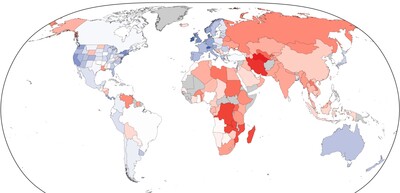 Preview |
Cover Image
20260919_fix_the_business_to_industry_index_front.jpg Download (394kB) | Preview |
Preview |
PDF (Full Text)
20260919_fix_the_business_to_industry_index.pdf Download (13MB) | Preview |
![[thumbnail of Full Text -- EPub]](/style/images/fileicons/other.png) |
Other (Full Text -- EPub)
20260919_fix_the_business_to_industry_index.epub Download (14MB) |
Alternative Locations
Abstract or Brief Description
A defining feature of neoclassical economics is that it treats ‘business’ and ‘industry’ as synonyms. As such, mainstream economists assume that a firm’s business income reveals its industrial output
To arrive at this convenient equivalence, economists pretend that in a competitive market, commodity prices reveal the production of consumer ‘utility’. So when economists speak of ‘output’, they mean the creation of paid-for satisfaction. But since this ‘utility’ goes perpetually unmeasured, the whole operation represents an act of faith — no different than the imagined equivalence between the father, the son, and the holy ghost.
Looking at this act of ideological faith, Jonathan Nitzan and Shimshon Bichler find little reason to believe. Instead, they take the heretical view, first articulated by Thorstein Veblen, that ‘industry’ and ‘business’ are opposing activities.
Let me explain their thinking.
In the Veblenian sense, the human capacity to be ‘industrious’ predates capitalism; indeed, it predates humanity. All living things are ‘industrious’ in the sense that they pursue activities that help them survive and reproduce in the natural world. So when humans farm corn, we are manifesting a deep biological urge to exploit the natural world in ways that benefit us.
Enter capitalism. In capitalism, human industriousness gets controlled by a paywall. Thus, when a capitalist farmer grows corn, he does so not to feed himself (directly), but to make a profit. As such, farming becomes a ‘business’ activity marked by the use of property rights to extract income.
This use of property rights, in turn, gives rise to a complicated relation between human ‘industry’ and capitalist ‘business’. Sometimes, what is good for business is good for industry. For example, when a farmer buys a larger tractor, he can grow more corn, and therefore, receive more income. But other times, business benefit comes at the expense of industry. For example, if a farmer monopolizes the corn market, he can extract more income by restricting corn production and raising corn prices. The point is that outside of neoclassical fantasies, ‘industry’ and ‘business’ have a complex relationship that cannot be deduced from armchair theory. To understand how the real world works, we need to get our boots muddy with actual data.
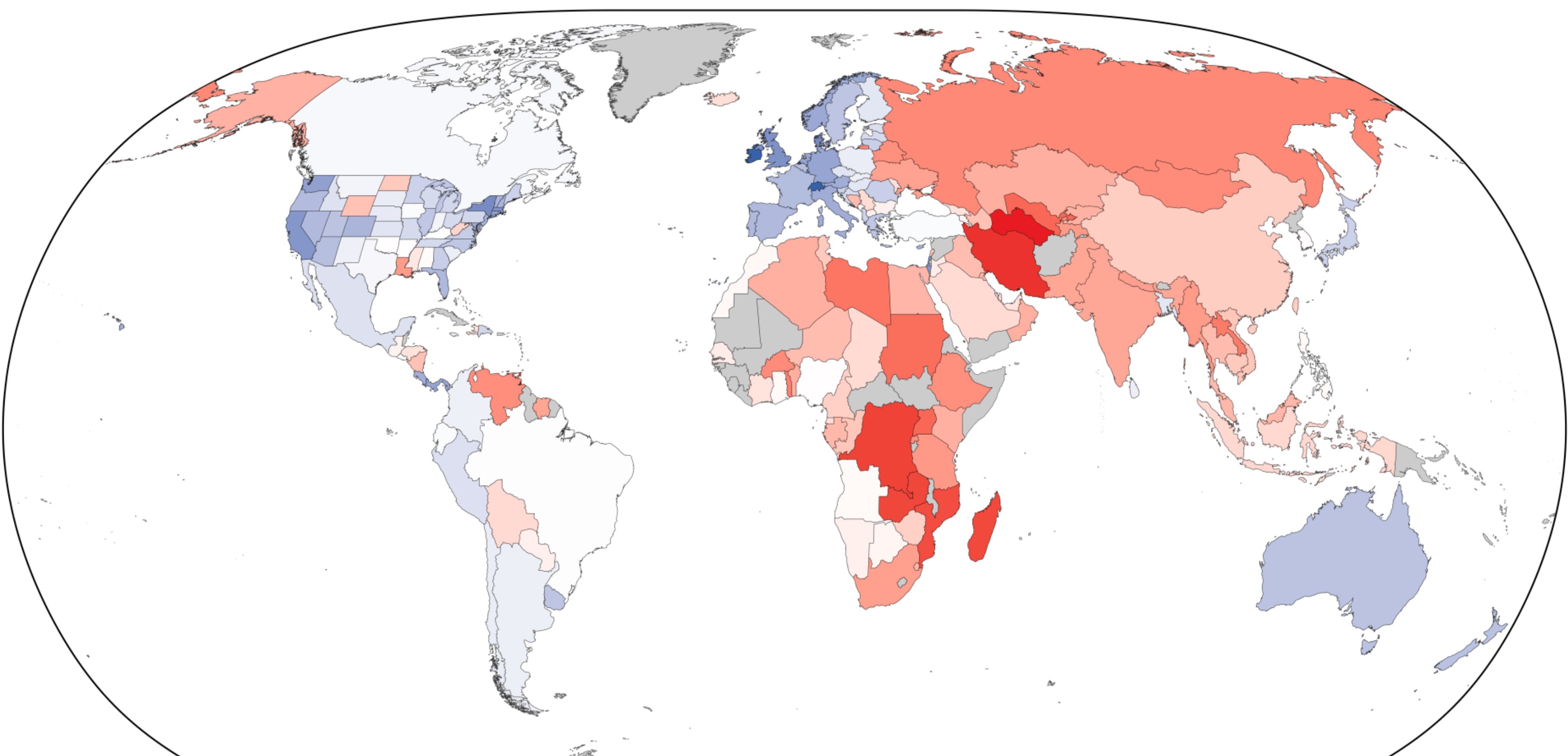
Enter the business-to-industry index. This is a metric that I devised while thinking about the business of the US Pentagon (and its surprising inability to wage war). In this essay, I explore how the business-to-industry index can be used to study the broader history and geography of capitalism.
Language
EnglishPublication Type
Article - MagazineKeywords
business energy global history of capitalism income distribution industry power VeblenSubject
BN International & GlobalBN Power
BN Production
BN Value & Price
BN Business Enterprise
BN Capital & Accumulation
BN Comparative
BN Distribution
BN Geography
BN Growth
BN History
BN Industrial Organization
Depositing User
Jonathan NitzanDate Deposited
19 Sep 2026 16:50Last Modified
19 Sep 2026 16:50URL:
https://bnarchives.net/id/eprint/895Actions (login required)
 |
View Item |