
The Political Economic Roots of Hollywood Strikes
McMahon, James.
(2026).
Working Papers on Capital as Power. February. pp. 1-25.
(Article - Working Paper; English).
![[thumbnail of 20260213_mcmahon_the_pe_roots_of_hollywood_strikes_front.jpg]](https://bnarchives.net/883/1/20260213_mcmahon_the_pe_roots_of_hollywood_strikes_front.jpg) 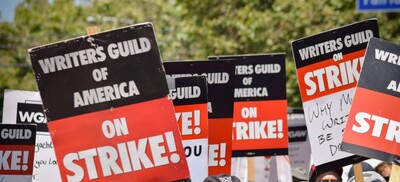 Preview |
Cover Image
20260213_mcmahon_the_pe_roots_of_hollywood_strikes_front.jpg Download (321kB) | Preview |
Preview |
PDF (Full Text)
20260213_mcmahon_the_pe_roots_of_hollywood_strikes.pdf Download (2MB) | Preview |
Alternative Locations
https://capitalaspower.com/2026/02/mcmahon-the-political-economic-roots-of-hollywood-strikes/, https://www.econstor.eu/handle/10419/337455
Abstract or Brief Description
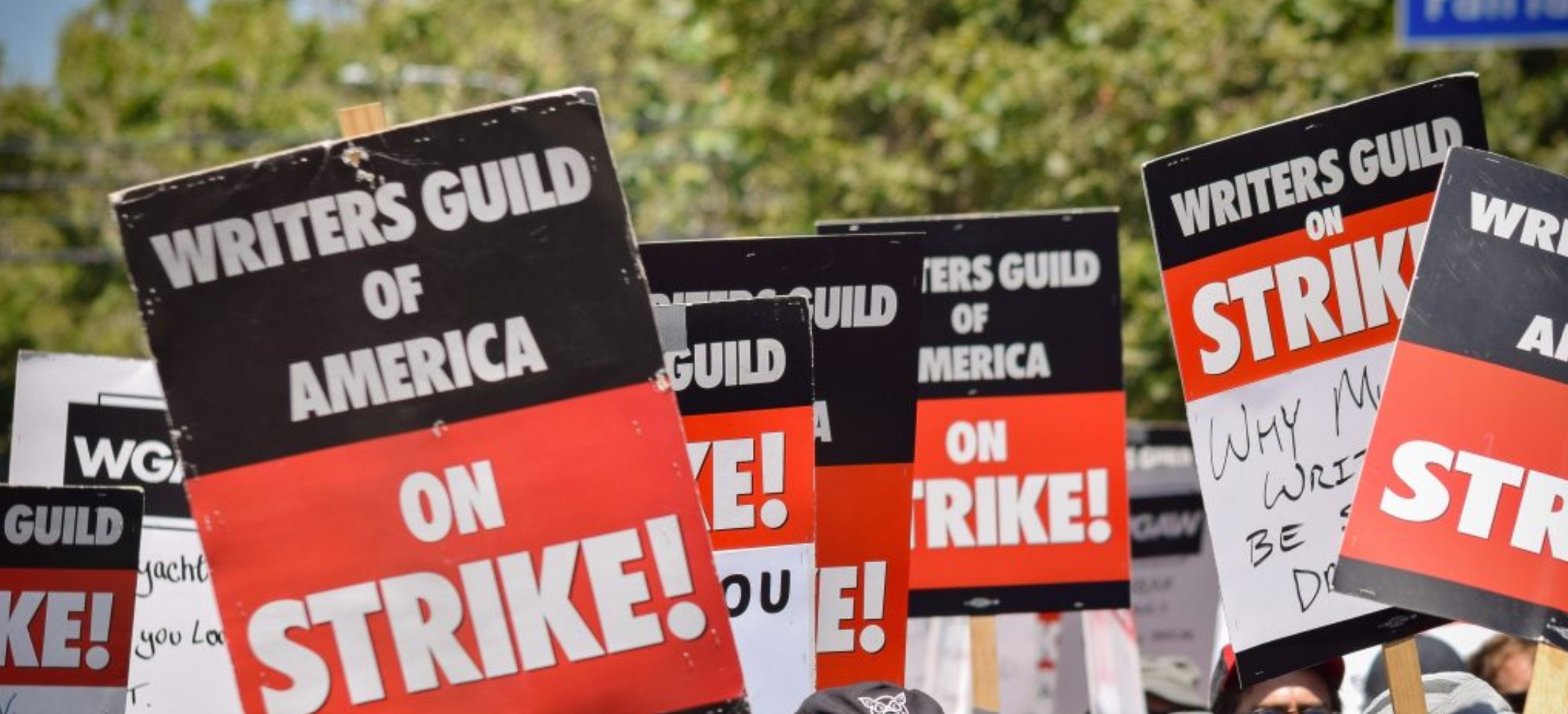
This paper investigates the timing of labour strikes in Hollywood. The occurrence of strikes, such as the WGA and SAG-AFTRA strikes in 2023, can make sense when we have the hindsight to piece together the historical details of what created rifts between labour and management. But why do strikes in Hollywood occur when they do? Are there periods of time when it is more likely that contract negotiations will break down and unions in Hollywood will go on strike?
This paper uses multiple sources of empirical data to analyse the historical trends of strikes in Hollywood between 1950 and 2023. Strikes in Hollywood – particularly by the WGA and SAG-AFTRA – have common political economic roots. They tend to occur when the profits of major Hollywood studios are in a type of danger zone: when the differential profits of Hollywood are stagnating or declining. Differential profit is a relative measure of performance. Differential profit can be found in any situation where a firm or set of firms holds a better stream of income than what others hold. For example, differential gains still occur when a firm loses profit at a slower rate than others. In the case of the Hollywood studios, differential profit is measured against Dominant Capital, which is our proxy for the S&P 500.
The paper argues that danger zones of differential accumulation hurt Hollywood labour because Hollywood’s major studios often rely on stagflation to differentially profit. As a combination of unemployment and inflation, stagflation is antagonistic to union demands for increased employment, job security, or higher wages. In Hollywood, strikes tend to occur during periods when film production is stagnating. The longest absence of strikes was from 1990 to 2000, when Hollywood reversed its stagflation strategy and released films at a level that was not seen in decades.
Stagflation also has an influence on the management-artist hierarchy in Hollywood. While standard artist contracts in Hollywood construct a hierarchical structure that effectively prevents artists from exercising moral rights in opposition to aesthetic changes by management, increases of stagflation in Hollywood increase the employment size of management, both absolutely and relative to the collective employment size of actors, directors, producers, and writers.
Language
EnglishPublication Type
Article - Working PaperKeywords
differential accumulation dominant capital Hollywood labour power profit stagflation strikesSubject
BN LabourBN Money & Finance
BN Power
BN Production
BN Region - North America
BN Resistance
BN Value & Price
BN Business Enterprise
BN Capital & Accumulation
BN Conflict & Violence
BN Cooperation & Collective Action
BN Crisis
BN Culture
BN Distribution
BN Growth
BN Industrial Organization
Depositing User
Jonathan NitzanDate Deposited
18 Feb 2026 04:24Last Modified
04 Mar 2026 14:07URL:
https://bnarchives.net/id/eprint/883Actions (login required)
 |
View Item |