
Middle East Danger Zones: A 2026 Update
Bichler, Shimshon and Nitzan, Jonathan.
(2026).
Research Note. March. pp. 1-7.
(Article - Working Paper; English).
![[thumbnail of 20260300_bn_me_danger_zones_a_2026_update_front.jpg]](https://bnarchives.net/885/1/20260300_bn_me_danger_zones_a_2026_update_front.jpg)  Preview |
Cover Image
20260300_bn_me_danger_zones_a_2026_update_front.jpg Download (25kB) | Preview |
Preview |
PDF (Full Text)
20260300_bn_me_danger_zones_a_2026_update.pdf Download (420kB) | Preview |
![[thumbnail of Full Text]](/style/images/fileicons/other.png) |
HTML (Full Text)
20260300_bn_me_danger_zones_a_2026_update_web.htm Download (42kB) |
![[thumbnail of Figure 1 -- JPG]](https://bnarchives.net/885/5/20260300_bn_me_danger_zones_a_2026_update_fig_01.jpg) 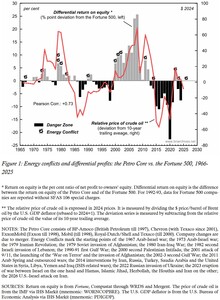 Preview |
Other (Figure 1 -- JPG)
20260300_bn_me_danger_zones_a_2026_update_fig_01.jpg Download (595kB) | Preview |
![[thumbnail of Figure 2 -- JPG]](https://bnarchives.net/885/6/20260300_bn_me_danger_zones_a_2026_update_fig_02.jpg) 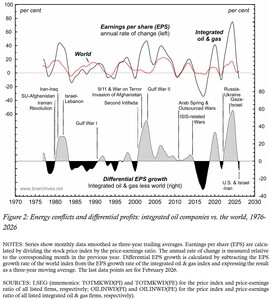 Preview |
Other (Figure 2 -- JPG)
20260300_bn_me_danger_zones_a_2026_update_fig_02.jpg Download (396kB) | Preview |


Alternative Locations
https://capitalaspower.com/casp-forum/topic/middle-east-danger-zones-a-2026-update/
Abstract or Brief Description
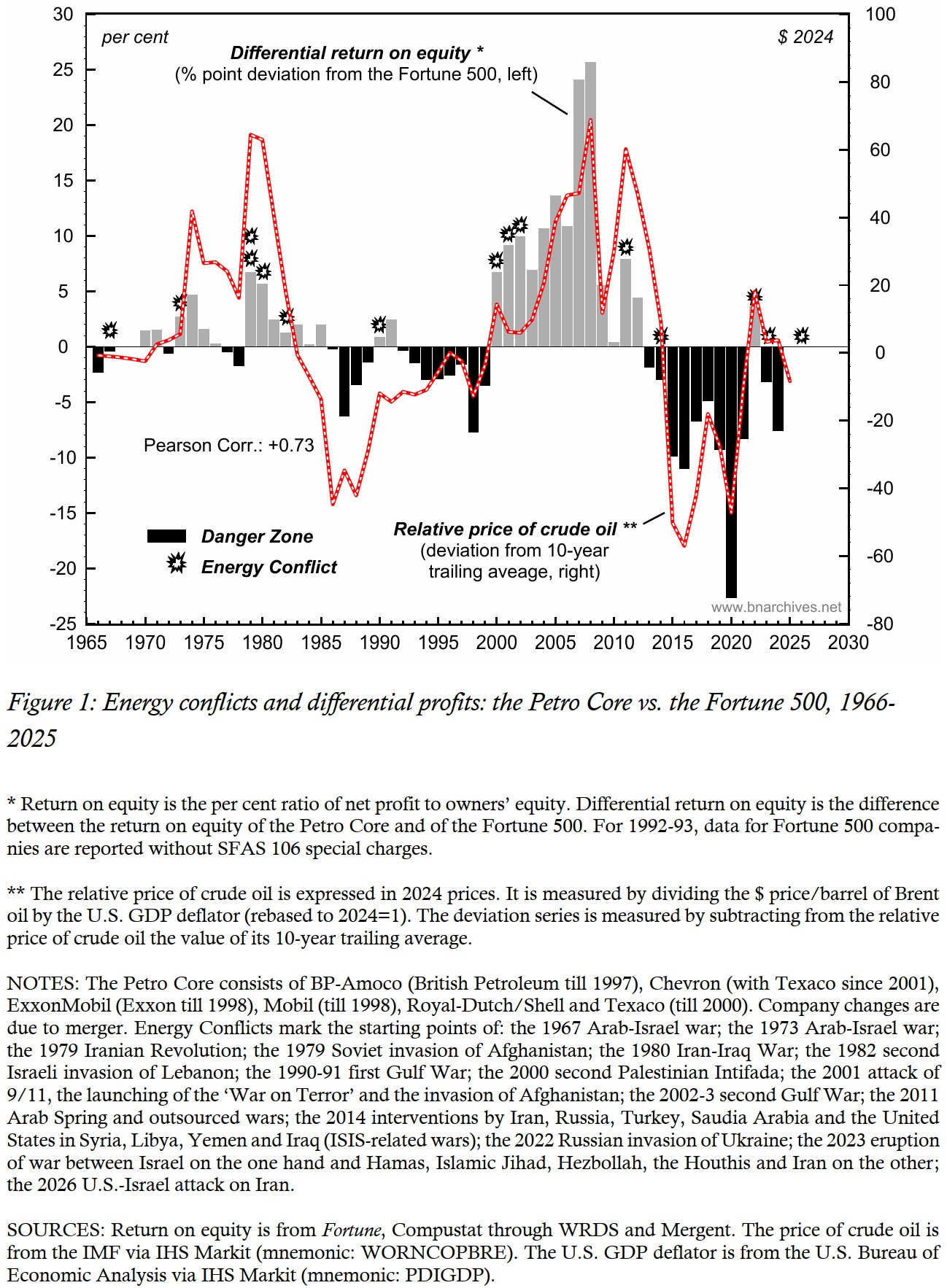
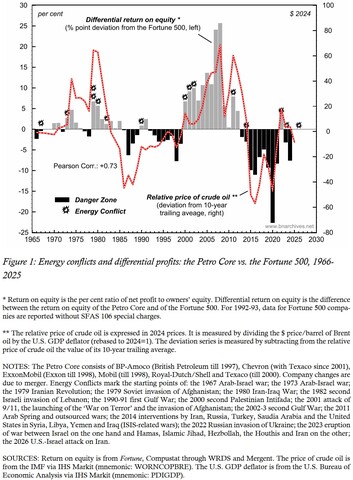
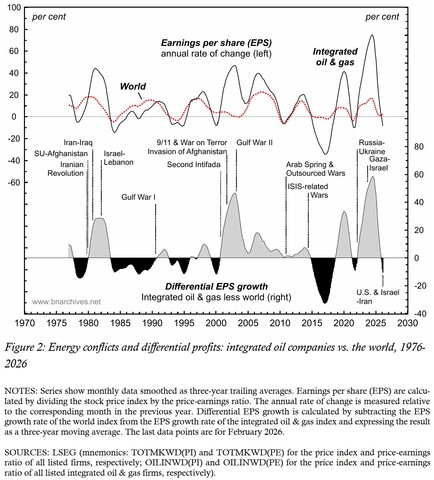
In February 2026, the United States and Israel attacked Iran, kick-starting a new Middle East ‘energy conflict’. And like most energy conflicts over the past half century, this one too began after the region fell into a ‘danger zone’.
The notion of a danger zone was first introduced in our 1995 paper, ‘Bringing Capital Accumulation Back In’. We coined it to denote a period in which the Middle East is likely to experience an oil-related conflict or war and examined its implications for the region’s global political economy.
Capitalism, we argued in our research, was a regime built on the capitalization of power, organized through relative pecuniary quantities and ruled by state-backed, dominant-capital coalitions. In line with this approach, we proposed that, since the late 1960s, Middle East danger zones hinged on the differential profits of dominant oil companies; that is, on whether their rate of return beats or trails the corporate average.
Specifically, we claimed that when the differential profits of the oil companies are positive – namely, when they beat the average – the risk of regional conflict is low. And conversely, when their differential profits are negative – i.e., when they trail the average – the region is in a danger zone, and the risk of conflict is high.
Language
EnglishPublication Type
Article - Working PaperKeywords
danger zones differential accumulation dominant capital oil energy conflicts Middle East OPEC Petro Core prices profit warSubject
BN International & GlobalBN Money & Finance
BN Power
BN Region - Europe
BN Region - North America
BN Region - Middle East
BN State & Government
BN Value & Price
BN War & Peace
BN Business Enterprise
BN Capital & Accumulation
BN Comparative
BN Conflict & Violence
BN Crisis
BN Distribution
Depositing User
Jonathan NitzanDate Deposited
14 Mar 2026 23:25Last Modified
16 Mar 2026 00:56URL:
https://bnarchives.net/id/eprint/885Actions (login required)
 |
View Item |